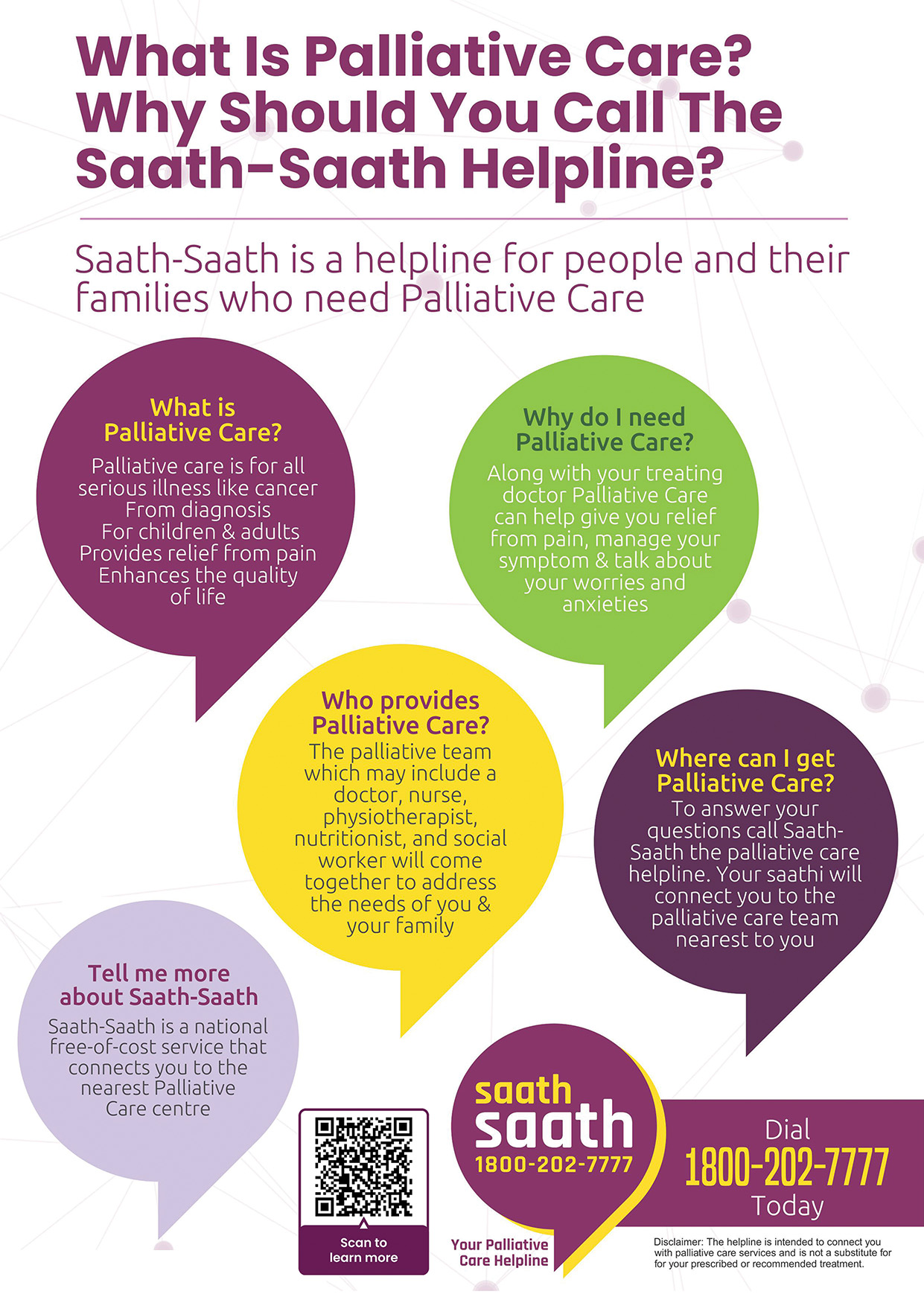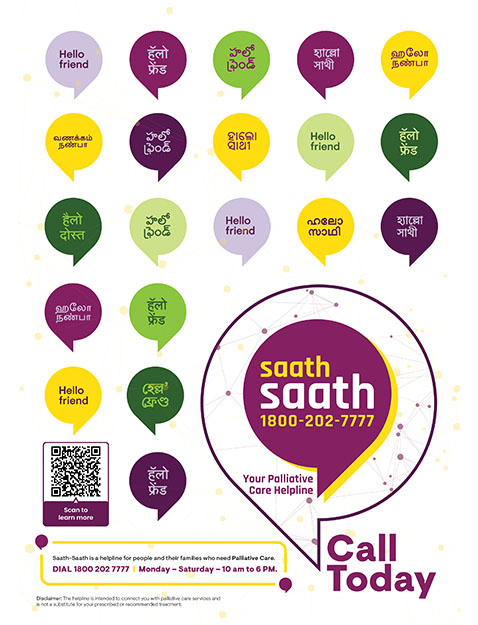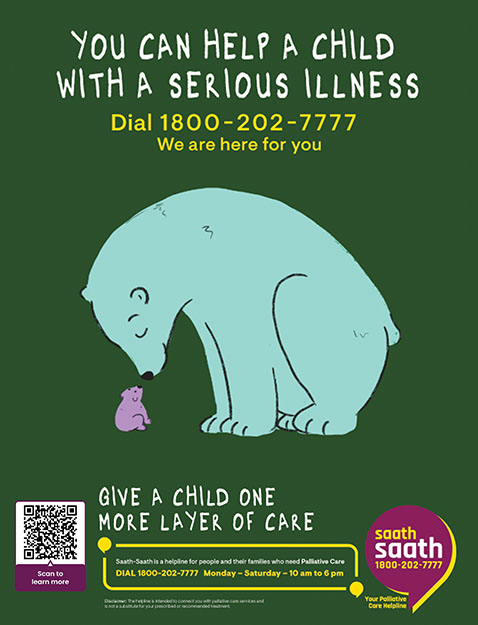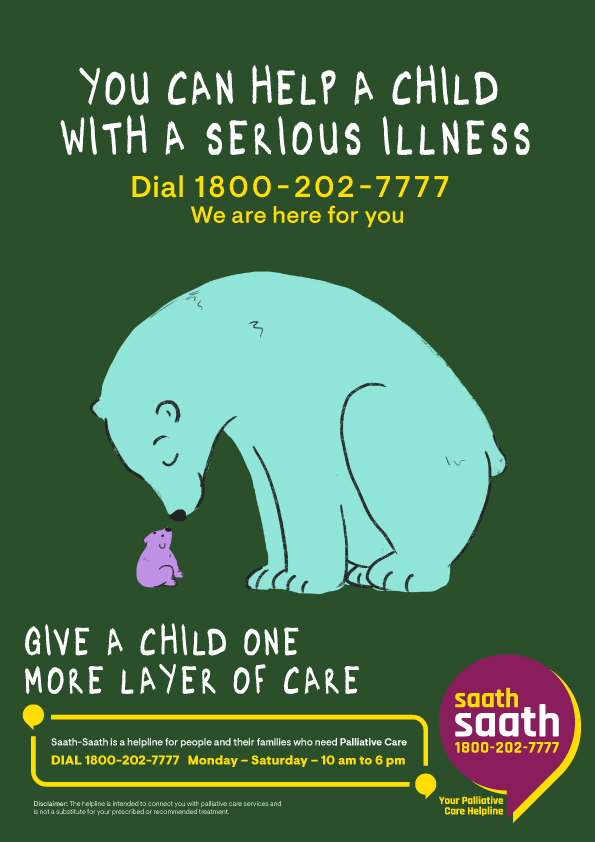


The Saath-Saath Helpline (1800-202-7777) is a national, toll-free service that connects people living with serious illnesses, their caregivers, and healthcare professionals to palliative care providers across India. Staffed by trained volunteers, the helpline offers free, multilingual support in Hindi, English, and Marathi—providing compassionate listening, guidance, and referrals to local care services. It serves as a warm, trusted voice for those seeking comfort, clarity, or connection during uncertain times.
Launched in October 2021, the helpline began as a collaboration among 11 palliative care organizations and has since grown into a network of 40 partners, spanning 20 states and union territories.
The helpline assists patients with serious illnesses like cancer, neurological disorders (dementia, Parkinson’s disease, stroke/ paralysis, motor neuron disease), end stage organ failure (heart, kidney, liver lungs), chronic pain, frailty in elderly, thalassemia etc.
Living with a serious illness like cancer, thalassemia, Parkinson's or lung disorders? Palliative care supports you and your family with comfort and care from the time of your diagnosis.
The Saath-Saath helpline connects you with the palliative care closest to you, ensuring an additional layer of care for you and your family.
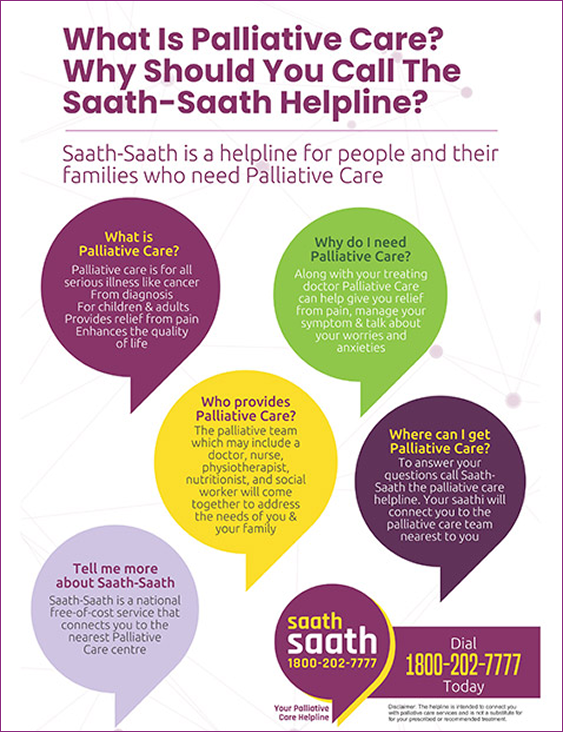
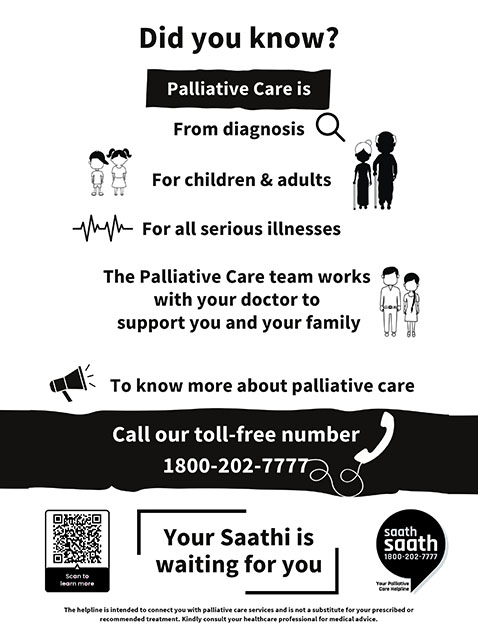
Want to know more? Download this poster.
We connect you to the closest palliative care centre.

Our toll-free helpline (1800-202-7777) is open Monday to Saturday, 10 a.m.–6 p.m., guiding patients, caregivers, and healthcare professionals through the challenges of serious illness. We connect you to trusted palliative care services and compassionate support across India.

Launched in 2025, our multilingual AI-enabled chatbot offers 24/7 assistance, ensuring quick, reliable access to palliative care information and guidance—anytime, anywhere.
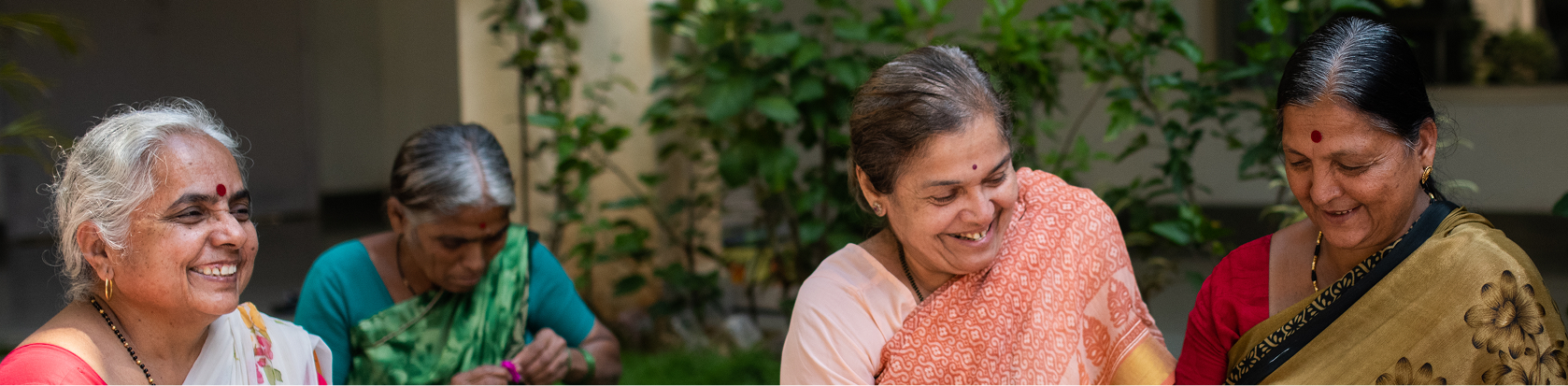















Be the one to start the conversation on Palliative Care - Download, share, and spread the word—at schools, clinics, offices, and in your community—to help more people find the care they need.
The Saath Saath Helpline is a support and information service designed to assist individuals and caregivers. It does not provide medical advice, prescriptions, or clinical decision-making support. Any information shared should not be considered a substitute for professional medical consultation. Users are advised to seek guidance from qualified healthcare practitioners for diagnosis and treatment.